
Your Guide to Post Beach Dog Care in Dundee
Why a Simple Shake-Off Isn't Enough After a Beach Trip
There are few things more joyful than watching a dog race across the sands of Broughty Ferry or splash through the waves at Monifieth beach. That unrestrained happiness is what makes our local coastline so special for dog owners. But once the fun is over and you are heading back to the car, the real work of post-beach dog care begins. That vigorous shake-off, while impressive, barely scratches the surface of what is needed.
The combination of salt and sand poses a hidden threat to your dog’s skin and coat. Salt crystals are not just a taste nuisance; they are physically abrasive and act as a desiccant. As the salt water on dog skin dries, it aggressively draws essential moisture from the skin and paw pads. This process can lead to dryness, irritation, and eventually painful cracking, leaving your dog susceptible to infection.
Then there is the sand. Fine grains of sand work their way deep into the coat and act like microscopic sandpaper. The friction is most intense in areas you might not immediately check, such as between their toes, in the groin, and under their legs. This constant, low-level abrasion can quickly escalate into painful skin conditions. Vets often see dogs after a beach trip with acute moist dermatitis, commonly known as ‘hot spots’, which are intensely itchy and inflamed patches of skin that can appear seemingly overnight.
For dogs with longer fur, this mixture of dampness and grit can cause severe matting. What starts as a minor tangle can quickly become a dense, tight knot that is impossible to brush out at home. These mats pull painfully on the skin and restrict airflow, creating a perfect environment for bacteria to thrive.
Beyond the external issues, there is also the less obvious risk of ingestion. As your dog licks their fur to self-clean, they can swallow a significant amount of salt and sand. This can lead to gastrointestinal distress, including vomiting and diarrhoea. So, while the beach offers a fantastic day out, understanding these risks is the first step in ensuring it remains a happy and healthy experience.
Your First Line of Defence Against Salt and Sand
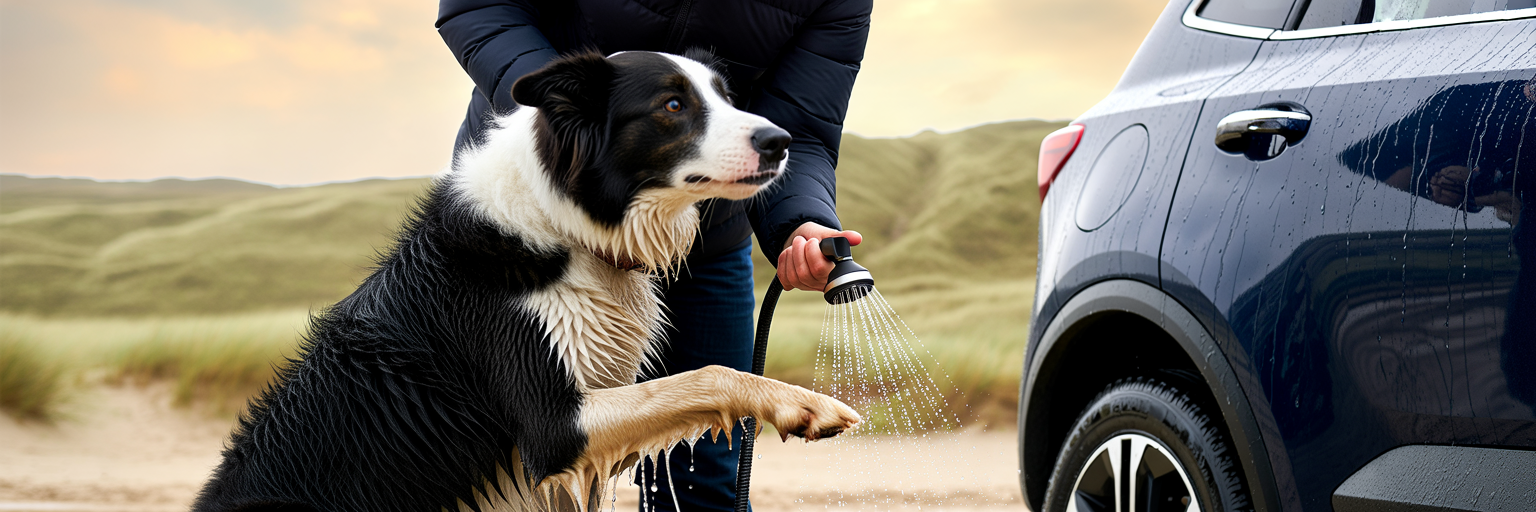
Having understood the problems salt and sand can cause, your immediate response after leaving the beach is the single most important step you can take. The goal is to act before the saltwater has a chance to dry and crystallise on your dog’s skin and fur. This is where a thorough rinse with fresh water becomes your first and most effective line of defence.
This is not a full bath, but a targeted, systematic rinse designed to dislodge the worst of the coastal debris. Use lukewarm water if possible, as cold water can be a shock to your dog’s system, while hot water can aggravate any existing skin irritation. Start at your dog’s head, being careful to shield their eyes and ears, and work your way down their body. This ensures you are washing the sand and salt downwards and off them, rather than moving it around.
Pay special attention to the areas where sand and salt love to hide. These friction zones trap the most debris and are prone to irritation. A quick rinse often misses them, so you need to be methodical. Focus your efforts on:
- The belly and chest, which are constantly exposed to sand and surf.
- Armpits and groin, where friction and moisture create a recipe for discomfort.
- Between the paw pads, a notorious spot for compacted sand.
- Behind the ears and under the tail, where fur can be dense and easily trap grit.
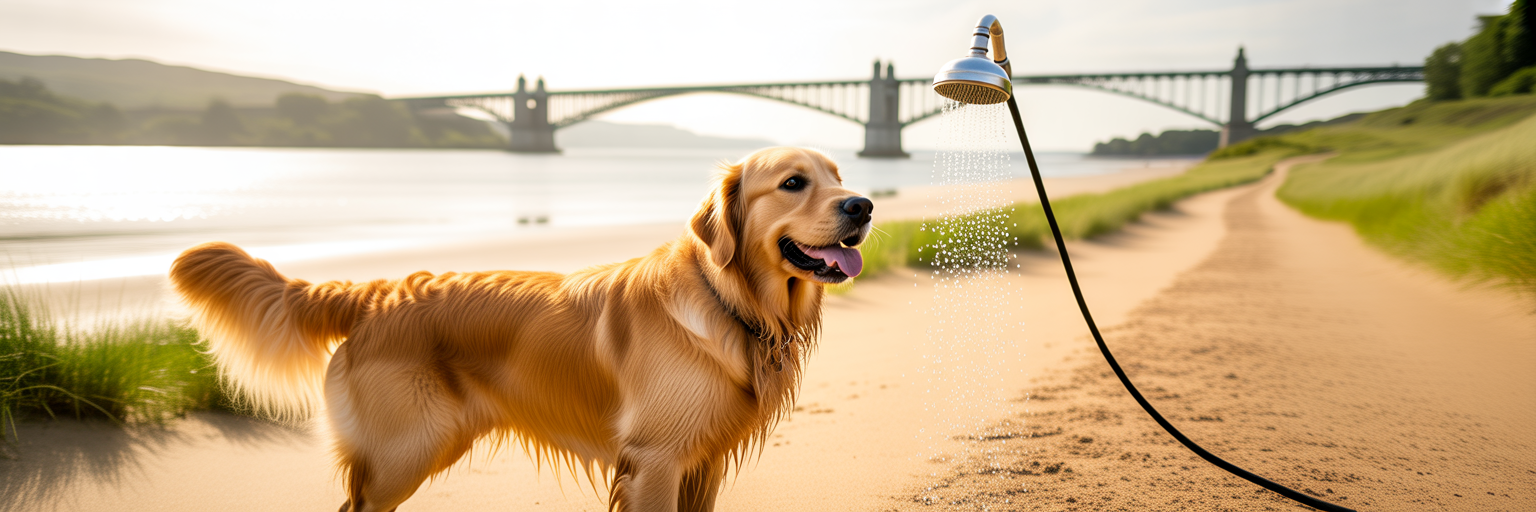
For those who make Dundee beach dog walks a regular part of their routine, this step can be made much easier. Consider investing in a portable rinse system. This could be a dedicated pet shower that attaches to your car’s utility socket or simply a few large containers of pre-filled water kept in the boot. Having this ready to go transforms the rinse from a chore into a quick, manageable part of every beach trip, preventing problems before they even have a chance to start.
Brushing Techniques for Different Coat Types
After the initial rinse, your next tool is the brush. Brushing is about the mechanical removal of any remaining sand and, crucially, preventing mats from forming. This step is entirely different from the water-based cleaning you have just done, and the technique varies significantly depending on your dog’s coat.
For dogs with long, double, or thick coats, like Golden Retrievers, Collies, or German Shepherds, the ‘dry brush first’ rule is non-negotiable. If you take your dog straight from the beach to the bath, the water will turn any loose sand and small knots into what can only be described as cement-like mats. Before any water touches them, use a slicker brush to gently work through the undercoat and lift out loose fur and sand. Follow this with a steel comb to carefully tease out any tangles you find. This pre-emptive work makes the subsequent rinse and wash far more effective.
For short-haired breeds like Labradors, Boxers, or Beagles, the challenge is different. Their fur does not mat in the same way, but fine sand can get trapped close to the skin, causing irritation. A rubber curry brush is the perfect tool here. Used in a circular motion, it lifts fine sand away from the skin, stimulates blood flow, and helps distribute natural oils. It is an effective way to remove sand from dog fur that a simple towel dry would miss.
After the rinse, a final, gentle brush-through is important for all coat types. This ensures any remaining tangles are addressed and helps to separate the fur, promoting better airflow and speeding up the drying process. While it might be tempting to just give a smooth-coated dog a vigorous towel dry and call it a day, a quick pass with a brush is always the superior method for preventing skin irritation. If you find mats have already formed and are too tight to tease out, it is best to seek professional help. Attempting to cut them out at home can easily result in injury, so we recommend using expert de-matting services to handle it safely.
Protecting Paws and Ears from Coastal Elements
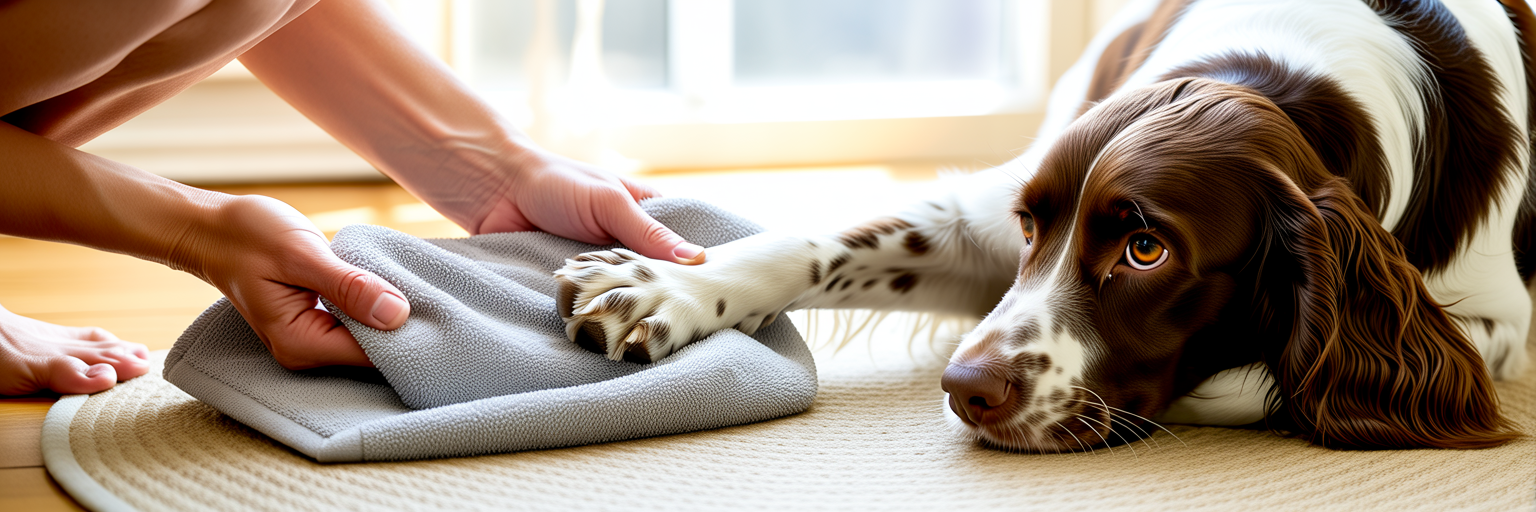
While we often focus on the main body of the coat, the paws and ears are particularly vulnerable to the effects of a beach trip and require specific attention. These areas are often overlooked in a quick clean-up, but neglecting them can lead to significant discomfort and even infection.
Effective dog paw care after beach walks goes beyond a simple rinse. You need to gently spread your dog’s toes to flush out the hidden grit and compacted sand that gets lodged deep between the pads. After rinsing, it is absolutely crucial to dry this area thoroughly. Moisture trapped between the pads creates a warm, dark environment where yeast and bacteria can flourish, leading to painful infections and a condition often called 'Frito feet' due to its distinctive smell. Once the paws are clean and completely dry, applying a soothing, moisturising paw balm helps to rehydrate the pads and repair any microscopic abrasions caused by the sand.
In fact, paw balm has a dual purpose. Applying a thin layer *before* you head to the beach creates a protective barrier, giving the pads a layer of defence against abrasive sand and drying salt. For dogs that enjoy our local coastline regularly, this kind of routine dog paw pad care is essential.
Ear care requires a delicate touch. Use a soft, damp cloth to gently wipe any visible sand from the outer ear flap only. It is vital that you never insert anything, including cotton buds, into your dog’s ear canal. Doing so can push debris further in or even damage the eardrum. If you suspect your dog has water trapped in their ear—they might be shaking their head excessively or scratching at it—it is best to use a vet-approved ear cleaning solution or consult your vet for advice.
| Action | When to Perform | Primary Purpose |
|---|---|---|
| Apply Paw Balm | Before leaving for the beach | Creates a protective barrier against abrasive sand and drying salt. |
| Thoroughly Rinse | Immediately after leaving the beach | Flushes out salt crystals and sand particles from between toes and pads. |
| Gently Dry Between Pads | After rinsing | Prevents moisture buildup, which can lead to fungal or bacterial infections. |
| Re-apply Moisturizing Balm | After paws are clean and dry | Rehydrates paw pads and soothes any irritation caused by the coastal elements. |
Note: This checklist outlines a complete care routine. The products used should be specifically formulated for canine use to ensure they are safe and effective.
Deciding if a Full Shampoo is Necessary
A common question we hear from dog owners is whether a full shampoo is required after every single trip to the beach. The simple answer is no. In fact, over-bathing can be counterproductive. Frequent shampooing, especially with harsh products, can strip the natural oils from your dog’s coat. These oils provide a protective barrier for the skin and give the fur its healthy sheen. Removing them too often can lead to dryness, flakiness, and increased irritation.
A freshwater rinse is usually sufficient for a quick trip where your dog did not get excessively dirty. However, there are clear signs that indicate a full bath is warranted. A full shampoo is necessary if you notice:
- A persistent ‘damp dog’ or salty smell that lingers even after a rinse.
- A sticky, stiff, or greasy feeling to the coat when you run your hands through it.
- Visible grime, seaweed residue, or dirt that the initial rinse did not remove.
When a bath is the right call, product selection matters. Opt for a high-quality, moisturizing, and preferably sulfate-free dog shampoo. These formulas are designed to cleanse effectively without stripping those essential oils, helping to replenish any moisture lost to the salt and sun. This helps restore the coat’s natural balance rather than contributing to further dryness.
Sometimes, despite your best efforts, the sand is just too deeply embedded, or the coat has started to mat. If you feel overwhelmed or are worried about causing your dog discomfort, it is always best to call in professional help. For a guaranteed safe and effective deep clean, the professionals listed on Dog Grooming Dundee have the right tools, products, and expertise for a restorative clean tailored to your dog's specific needs.
Why Thorough Drying is Non-Negotiable
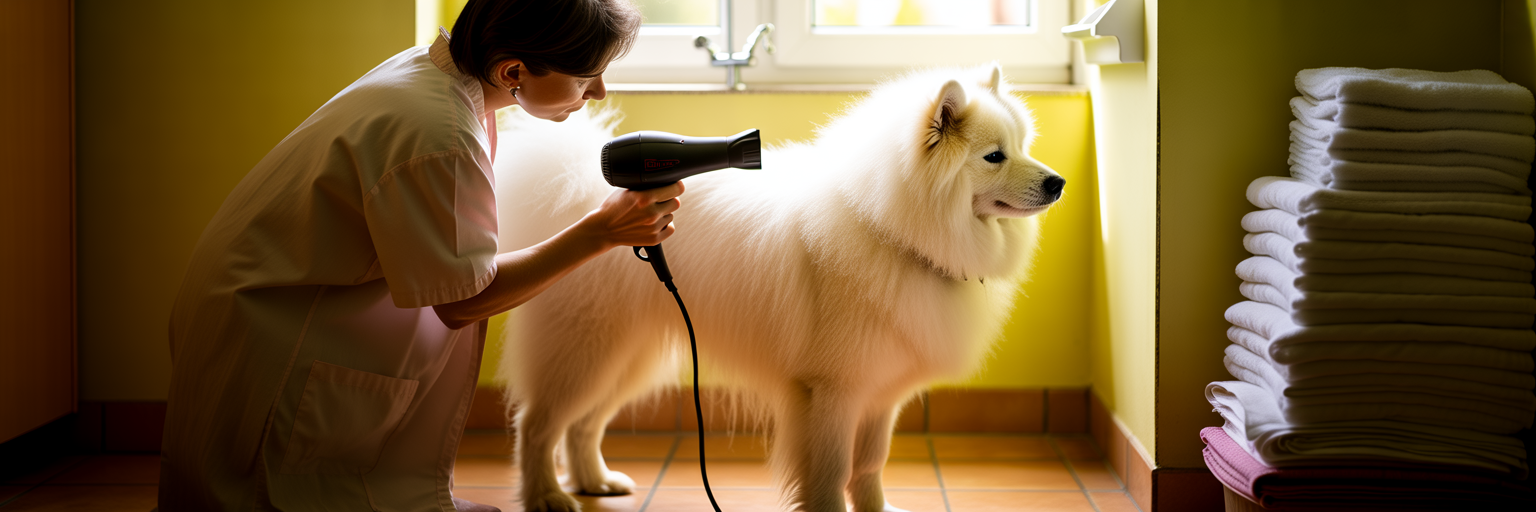
The final step in your post-beach care routine is drying, and it is just as important as washing. Simply letting your dog ‘air dry’ after a rinse or bath, especially if they have a thick or double coat, is a mistake. A damp undercoat that remains wet for hours creates a warm, humid microclimate right against the skin. This environment is the perfect breeding ground for bacteria and yeast, leading to the rapid development of painful hot spots and other fungal or bacterial infections.
Proper drying is a non-negotiable part of preventing these common skin problems. Here are the most effective methods to ensure your dog is dried completely:
- Start with high-absorbency microfiber towels. Instead of rubbing vigorously, which can cause tangles and breakage, gently squeeze the fur section by section. This will remove the majority of the water without creating knots.
- If you choose to use a hairdryer, safety is paramount. Always use it on the lowest heat and speed settings. Keep the dryer constantly moving to prevent concentrating heat on one spot, and hold your other hand in the airflow to monitor the temperature. If it feels too warm for your hand, it is definitely too hot for your dog’s skin.
Certain areas take much longer to dry and require extra attention. Before you consider the job done, double-check the dense fur at the base of the tail, on the hind legs (often called ‘trousers’), deep in the armpits, and across the chest. These spots are the last to dry and the first to develop issues if left damp. Ensuring your dog is bone-dry from the skin out is the final, crucial step in your dog grooming Dundee beach care routine, guaranteeing they are comfortable, healthy, and ready for their next coastal adventure.