
Your Guide to Dog Nail Trimming in Dundee
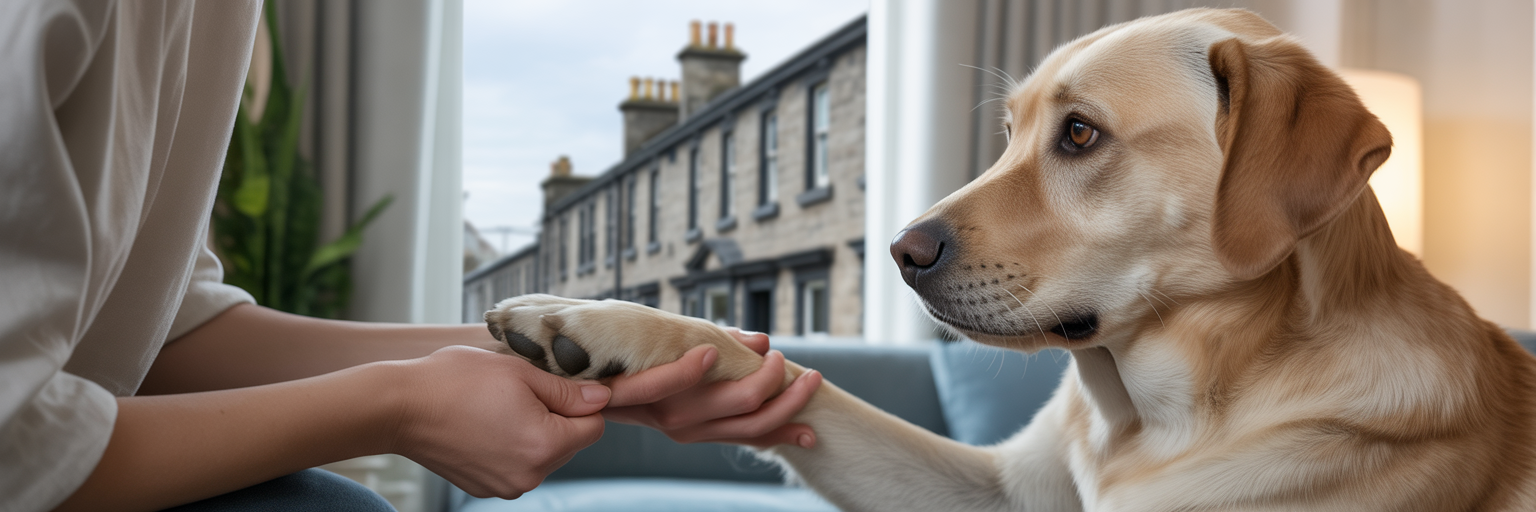
Why Healthy Nails Matter for Your Dog's Wellbeing
Every dog owner in Dundee knows that familiar sound, the gentle 'click-clack' of nails on the kitchen floor or pavement. It might seem like a minor detail of life with a dog, but that sound is a clear signal. It’s your dog’s way of telling you their nails need attention, and it’s about much more than just grooming. Think of it this way: letting your dog’s nails grow too long is like forcing them to wear ill-fitting shoes every single day. It’s uncomfortable and, over time, genuinely harmful.
When nails are too long, they hit the ground with every step, pushing the nail back into the nail bed. This constant pressure forces the dog to change how they stand and walk, shifting their weight awkwardly onto the back of their paws. This unnatural posture puts a continuous strain on their leg joints and tendons, which can lead to discomfort, joint pain, and even contribute to more serious skeletal problems down the line. It’s a subtle change, but one that has a significant impact on their long-term mobility and comfort.
The immediate risks are just as concerning. Overgrown nails are prone to splitting, breaking, or even curling back into the paw pad. This is not only extremely painful but also creates an open wound that is highly susceptible to infection. One of the most obvious overgrown dog nails symptoms is seeing the paw splay outwards because the nails are forcing the toes apart. You might think that walks on Dundee’s city pavements would naturally file them down, and to some extent, they do. However, for dogs who spend most of their time on softer surfaces, like the grassy fields of Camperdown Country Park or Baxter Park, there is very little natural wear. This is why even very active dogs often need regular trims.
So, how do you know when it’s time for a trim? Here’s a simple checklist:
- The Sound Test: You can hear that distinct clicking on hard floors.
- The Ground Test: When your dog is standing naturally on a flat surface, their nails are touching the ground.
- The Paw Test: Their paws look flattened or splayed, with the toes spreading apart.
Keeping an eye on these signs turns nail care from a chore into a fundamental part of keeping your dog happy and healthy.
Essential Tools for At-Home Nail Care
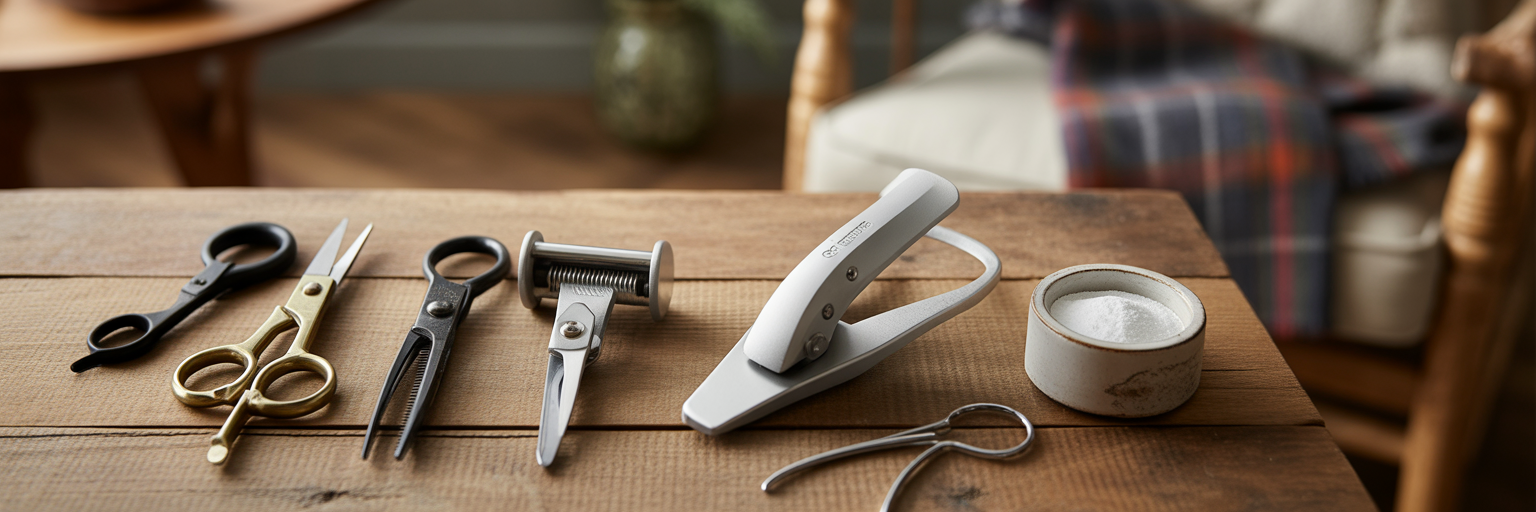
Before you begin trimming dog nails at home, gathering the right equipment is the first step towards a safe and successful experience. The tools you choose can make all the difference, not just for ease of use but for your dog’s comfort and safety. There are two main types of clippers to consider. Guillotine-style clippers have a single blade that slices through the nail as you squeeze the handle, making them a popular choice for small to medium-sized dogs. Scissor-style clippers, which look like small pliers, offer more leverage and are better suited for the thicker, tougher nails of larger breeds.
A modern alternative is the nail grinder. Instead of cutting, a grinder uses a high-speed rotating file to sand the nail down gradually. This offers incredible control, smooths the nail edge, and almost eliminates the risk of cutting the quick. For dogs who are terrified of the 'snap' sound of clippers, a grinder can be a much less stressful option. However, the noise and vibration can take some getting used to, so a period of gentle introduction is often needed. For those interested in this method, professional dog nail grinding can be a great way to see it in action.
Perhaps the most crucial item in your kit is styptic powder. Having it on hand is not a sign of failure, it’s the mark of a responsible owner who is prepared for accidents. If you do happen to nick the quick, a pinch of this powder applied with firm pressure will stop the bleeding almost instantly. A small pot of cornflour paste can also work in a pinch. Finally, invest in quality. When looking for safe dog nail clippers UK suppliers offer, choose a pair that is sharp and appropriately sized for your dog. Cheap, dull blades don’t cut the nail, they crush it, which is painful and can cause splintering.
Choosing the Right Nail Trimming Tool
| Tool Type | Best For | Pros | Cons |
|---|---|---|---|
| Scissor-Style Clippers | Medium to large dogs with thick nails | Durable, powerful, and provides a clean cut | Can be intimidating for beginners; risk of cutting the quick |
| Guillotine-Style Clippers | Small to medium dogs with thinner nails | Easy to use; the blade is replaceable | Not effective on very thick or large nails; can crush if dull |
| Nail Grinder | Anxious dogs; owners nervous about cutting the quick | Low risk of cutting the quick; smooths the nail edge | Noise and vibration can scare some dogs; takes longer than clipping |
This table provides a summary to help dog owners in Dundee select the most appropriate tool based on their dog's size, nail thickness, and temperament.
A Step-by-Step Method for Safe Nail Trimming
Once you have your tools, the next stage is learning the technique. Approaching this task with a clear, calm method is the key to success. This step-by-step guide on how to cut dog's nails is designed to build your confidence and keep your dog comfortable throughout the process.
- Create a Calm Environment
Choose a time when your dog is already relaxed, perhaps after a good walk or during a quiet evening. Find a well-lit room away from distractions, lay down a non-slip mat to help your dog feel secure, and have plenty of high-value treats ready. The goal is to make this a positive and predictable experience, not a stressful struggle. - Hold the Paw Securely but Gently
Position your dog so they feel supported, whether that’s sitting beside you on the floor or comfortably in your lap if they are small. Hold their paw firmly but gently. Use your thumb to press lightly on the top of the toe and your forefinger to support the pad underneath. This helps to separate the toes and extend the nail, giving you a clear view. - Identify the Quick
This is the most critical part of the process. The quick is a blood vessel and nerve that runs into the nail. On dogs with light-coloured nails, you can often see it as a pinkish area inside the nail. Avoid cutting into this zone. For dogs with dark nails, it’s impossible to see the quick from the outside. Here, you must use the 'sliver' technique. Trim a tiny amount from the very tip of the nail and look at the cut surface. If it appears chalky white, you are in the dead part of the nail and can safely trim another tiny sliver. Stop immediately if you see a grey or black dot appear in the centre, as this means you are getting close to the quick. - The Trimming Technique
Don’t try to take the whole length off in one go. Instead, make several small cuts at a 45-degree angle, following the natural curve of the nail. This approach gives you far more control and significantly reduces the risk of cutting too short. The aim is to trim the nail so it no longer touches the floor when your dog is standing. - If You Cut the Quick
First, don’t panic. As the PDSA highlights in their expert guidance on nail trimming, staying calm is essential to avoid transferring your anxiety to your dog. A nicked quick will bleed, but it’s rarely a serious injury. Take your styptic powder on a fingertip or cotton bud and press it firmly onto the end of the bleeding nail for about 30 seconds. The bleeding should stop quickly. Give your dog lots of praise and a special treat, and then end the session on that positive note.
Managing Your Dog's Fear and Anxiety
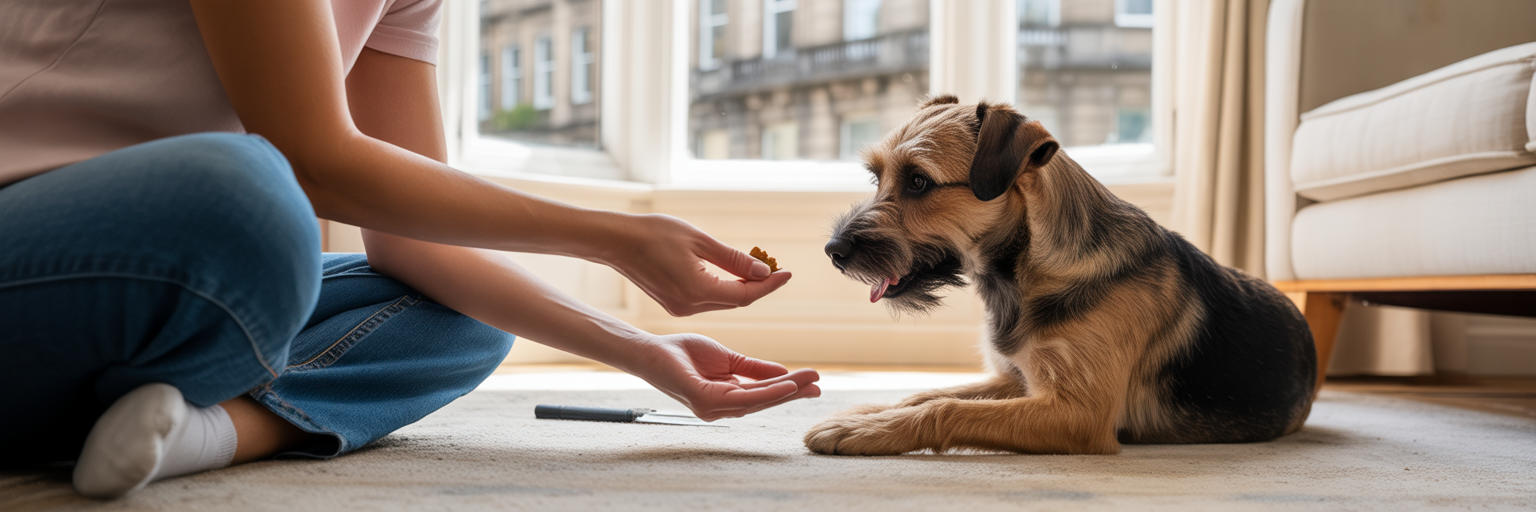
For some dogs, the sight of nail clippers can trigger an immediate fear response. If your dog trembles, pulls away, or growls, it’s a clear sign that the process is too overwhelming for them. Pushing through this resistance will only reinforce their anxiety and damage the trust between you. The key is to understand their body language and work with them, not against them. Watch for both subtle and obvious signs of stress:
- Lip licking or flicking their nose
- Yawning when they are clearly not tired
- Showing the whites of their eyes, often called 'whale eye'
- A tense body, low tail, or trembling
- Repeatedly pulling their paw away
- Low growling, whining, or even snapping
If you see these behaviours, stop. The most effective way forward is through desensitisation and counter-conditioning. This process slowly changes your dog's emotional response from fear to anticipation of a reward. It requires patience, but it builds a foundation of trust. Start by simply touching your dog’s paws and then giving them a treat. Once they are comfortable with that, show them the clippers and give a treat. Then, touch a nail with the clippers without cutting, and give a treat. This gradual exposure, paired with something they love, helps rewire their brain. These are core principles of positive reinforcement, a powerful tool in all aspects of dog care.
For dogs with deep-seated anxiety, the 'one nail a day' strategy can be incredibly effective. Instead of a long, stressful session, you trim a single nail and follow it with lots of praise and a high-value reward. It turns a dreaded event into a quick, predictable, and positive daily interaction. The most important lesson is to know when to stop. It is always better to end on a good note and try again tomorrow than to force the issue and make the fear worse.
Finding Professional Nail Trimming Help in Dundee
There is absolutely no shame in deciding that at-home nail trimming isn’t the right choice for you or your dog. In fact, recognising when to call in a professional is a sign of responsible ownership. It might be the best option if your dog has a severe phobia that makes home attempts unsafe, if their nails are already so overgrown they are curling into the pad, or if you simply lack the confidence or physical ability to do the job safely and calmly.
In Dundee, you generally have two options: a veterinarian or a professional groomer. A vet is the necessary choice if the nails have caused a medical problem, such as an infection, ingrown nail, or injury. They are also the best port of call for dogs with extreme anxiety that may require sedation for the procedure to be carried out without causing immense distress. For routine maintenance on a healthy but nervous dog, professional dog groomers in Dundee are an ideal solution. They are experienced in handling anxious dogs and have the right equipment and techniques to get the job done quickly and efficiently.
When you book an appointment, be prepared. Let the groomer know about your dog’s temperament and any past negative experiences with nail trimming. This information helps them tailor their approach. The cost for a nail trim in Scotland is generally modest, but it’s a worthwhile investment in your dog’s health and your own peace of mind. Finding a reputable service is crucial. Ask for recommendations from your local vet clinic or other dog owners in your community. Check for professional qualifications, such as a City & Guilds certificate, and read recent online reviews to see what other clients are saying. Taking the time for choosing the right dog groomer ensures your dog is in safe, capable hands.