
Top Puppy Grooming Tips for Dundee’s Rainy Climate
Embracing Puppy Care in Scotland’s Wettest City
Dundee may be known as Scotland's sunniest city, but residents know the truth. A persistent, fine drizzle is a frequent companion. For new puppy owners, this isn't just a minor inconvenience. It’s an environmental factor that requires a specific grooming strategy. These are the kind of practical dog grooming tips Scotland’s climate demands.
The constant dampness has direct consequences for a puppy's coat and skin. When moisture gets trapped in their soft, dense fur, it can lead to more than just a lingering "wet dog smell." As the fur clumps and dries, it can form painful mats that pull tightly on the skin. This environment also becomes a perfect breeding ground for fungal or yeast infections, a common issue related to dog skin care humid climate conditions.
The good news is that these problems are almost entirely preventable. A proactive and consistent grooming routine is the most effective way to keep your puppy healthy and comfortable, no matter what the weather forecast says. It transforms the potential stress of managing a wet, muddy pup into a predictable and manageable part of their care.
More than that, this routine becomes a powerful bonding experience. Instead of a frustrating chore, cleaning your puppy after a rainy walk becomes a quiet moment of connection. These small, daily interactions are fundamental in building the trust and affection that will define your relationship for years to come.
The Foundation: A Consistent Brushing Regimen
Daily brushing is your first and most important line of defence against moisture-related problems. Think of it as intercepting issues before they begin. A quick brush-through after a walk removes the dirt, stray leaves, and loose fur that your puppy collects outside. This simple action stops debris from combining with dampness to prevent dog matting wet fur, which can become incredibly difficult to remove once it sets.
Choosing the right tool is often a point of confusion for new owners, but it makes a significant difference. Instead of grabbing any brush, select one designed for your puppy’s specific coat type. For the many Terriers and Retrievers found across Dundee, the right tool can mean the difference between a pleasant experience and a frustrating struggle.
| Tool | Best For | Primary Function in a Damp Climate |
|---|---|---|
| Slicker Brush | Most coat types, especially curly or long fur (Poodles, Spaniels) | Removes loose fur and detangles surface knots before they tighten with moisture. |
| Undercoat Rake | Double-coated breeds (Retrievers, Terriers, Huskies) | Penetrates the topcoat to remove dense, dead undercoat fur that traps dampness against the skin. |
| Pin Brush | Long, silky coats (Setters, Yorkshire Terriers) | Gently separates long hairs and removes light debris without damaging the coat's texture. |
| Soft-Bristle Brush | Short, smooth coats (Beagles, Boxers) | Removes loose fur and dirt while distributing natural oils to add shine and protect the skin. |
| Grooming Comb | All coat types, especially for delicate areas | Used for finishing, checking for hidden tangles, and carefully working on sensitive spots like the face, ears, and paws. |
An effective brushing technique is straightforward. Start from your puppy’s head and work your way towards their tail, always brushing in the direction of hair growth. Be gentle but firm enough to reach the undercoat, where moisture loves to hide. This process not only keeps the coat healthy but also stimulates blood flow and distributes natural oils that protect the skin.
Of course, puppies are rarely cooperative at first. If your puppy is fidgety, keep initial sessions extremely short, use high-value treats as a reward, and choose a time when they are already calm. The goal is to build a positive association. For owners who find this step challenging, professional services for dog brushing can provide a great foundation and give you a clean slate to maintain at home.
Bathing Strategies for a Damp Environment
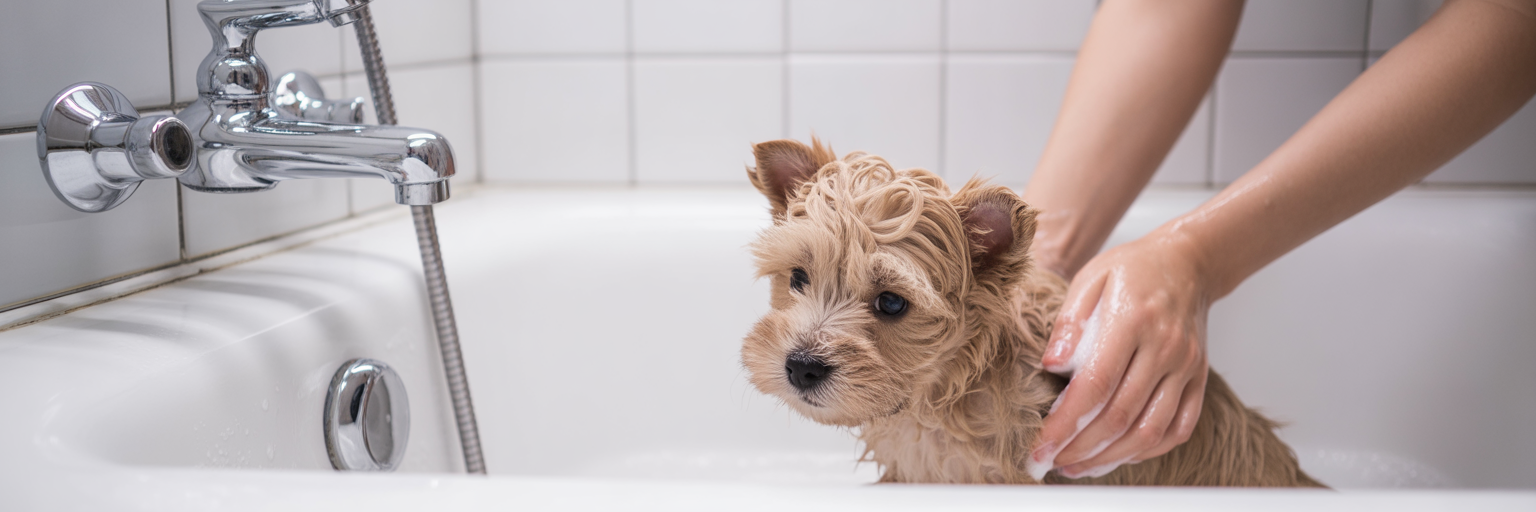
It seems logical to assume that a puppy frequently exposed to rain needs more baths. This is a common misconception that can actually cause more harm than good. Over-bathing strips the coat of its natural, protective oils. This leaves the skin dry, irritated, and surprisingly more vulnerable to the very environmental issues you're trying to prevent. A good rule of thumb is to bathe your puppy only every 4 to 6 weeks, unless they’ve had a particularly muddy adventure.
When bath time does arrive, the quality of your shampoo is critical. Human shampoos have the wrong pH balance for a dog's skin and can disrupt its natural protective barrier. Always choose a high-quality, puppy-specific shampoo. Look for gentle, moisturising formulas, perhaps with oatmeal, that cleanse effectively without stripping essential moisture.
The bathing process itself should be a calm and controlled procedure. Use lukewarm water, and be careful to protect your puppy’s eyes and ears from soap and water. The most important step is the rinse. You must be absolutely thorough, as any shampoo residue left on the skin is a primary cause of post-bath itching and irritation. Run your hands through their coat until the water runs completely clear and the fur feels squeaky clean.
Think of a bath not just as a surface clean, but as a complete reset for the coat and skin. A proper bath removes deep-seated grime and potential allergens, preparing the coat for the vital drying stage that follows. If bathing a wriggly puppy at home feels overwhelming, professional dog baths ensure the job is done safely and thoroughly, setting your puppy up for success.
The Critical Importance of Thorough Drying
If there is one step you cannot afford to rush in a damp climate, it is drying. Improper drying is the root cause of many common and painful skin problems. After a rainy walk in Camperdown Park, for example, lingering dampness trapped in a puppy’s dense undercoat creates the perfect warm, moist environment for "hot spots," which are painful patches of acute moist dermatitis. It also encourages fungal growth and bacterial infections that can be difficult to treat.
A practical, two-stage drying process is the most effective approach. First, use a highly absorbent microfibre towel to vigorously remove as much surface water as possible. Squeeze the fur rather than rubbing it harshly. The second stage involves a blow-dryer. While a pet-specific dryer is best, a human hairdryer on its lowest heat and speed setting can work if you are extremely careful. This is a key part of learning how to dry a puppy properly.
Safety during blow-drying is non-negotiable. Follow these guidelines every time:
- Always keep the dryer moving. Never focus the heat on one spot, as this can easily burn your puppy’s sensitive skin.
- Maintain a safe distance. Hold the nozzle several inches away from the coat.
- Protect their face. Avoid blowing air directly into your puppy’s eyes, ears, or nose.
- Use the fluff drying technique. Use one hand to hold the dryer while using your other hand to brush the coat. This separates the hairs and ensures the dense undercoat gets completely dry.
Finally, pay extra attention to the problem areas where moisture loves to hide. These spots are prime locations for yeast and bacteria to thrive if left damp.
- Between the paw pads
- In the ‘armpits’ (axillary region)
- Around and under the ears
- Under the tail and around the groin
Giving these areas a final check ensures your puppy is not just surface-dry, but truly dry all the way to the skin.
Post-Walk Paw and Ear Maintenance
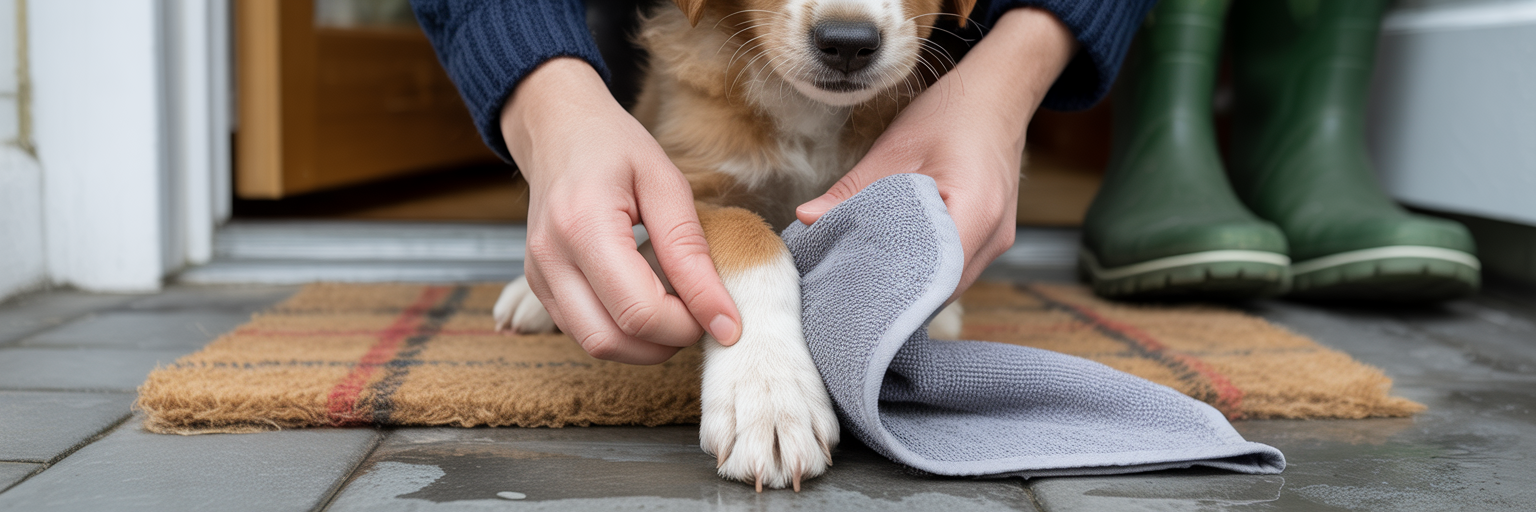
Establishing a non-negotiable "doorway routine" after every single walk is one of the most effective habits you can build. This isn't a major task. It’s about creating a simple, ingrained process that prevents mud and water from being tracked through your home while performing a quick health check. The setup is easy: keep a dedicated towel and some pet-safe wipes right by the entrance so you can immediately address wet paws, legs, and underbelly.
Paw care should go beyond a quick wipe. Gently clean between the pads to remove any grit, salt, or moisture that can cause irritation. It’s also highly practical to keep the fur between their pads trimmed short. This simple trim dramatically reduces the amount of water their paws collect and helps prevent the formation of painful ice or mud balls during colder weather. For owners unsure about trimming this sensitive area, specialised dog paw pad care is available from professionals who can do it safely.
Next, turn your attention to the ears. This is especially important for floppy-eared breeds, where trapped moisture can quickly lead to infections. After a wet walk, perform a quick visual check of the outer ear flap and gently wipe it dry. Be vigilant for the key signs of a potential ear infection: any redness, an unusual odour, or discharge. Catching these signs early can prevent a minor issue from becoming a painful problem.
This quick routine is more than just a cleaning task. It’s a vital daily inspection. It gives you a moment to check for any ticks, cuts, or thorns your puppy might have picked up outside. It turns a simple wipe-down into a proactive act of care.
Choosing Practical Gear for Wet Dundee Walks
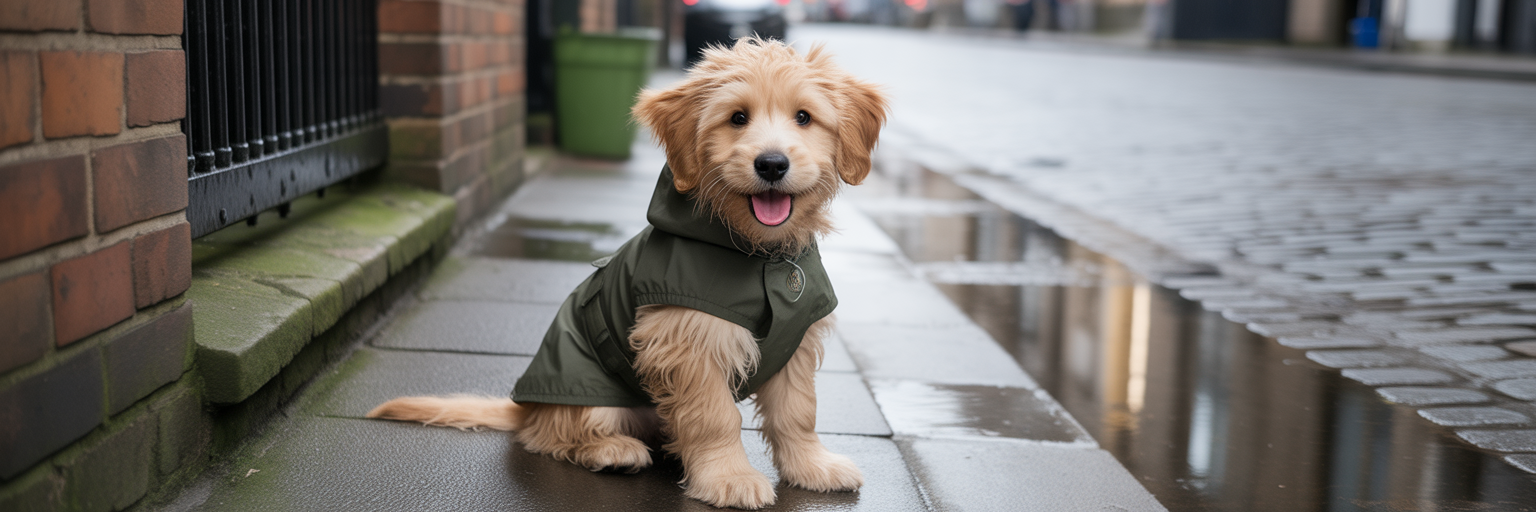
The right gear can significantly minimise the impact of wet weather, making your post-walk cleanup much easier. When selecting a coat for your puppy, prioritise function over fashion. Look for a waterproof or water-resistant material with key features like an underbelly cover to protect from splashes, secure leg straps to keep the coat from shifting, and reflective strips for better visibility on those grey, overcast Dundee days.
Consider the choice between a collar and a harness. In wet weather, a harness is often a better option. It distributes pressure across the chest and shoulders, and unlike a collar, it doesn't trap moisture directly against the sensitive skin of the neck, which is a common area for irritation and hot spots. Opt for quick-drying materials like nylon or neoprene over leather, which can become stiff and harbour dampness when wet.
Creating a "drying station" by your door makes the post-walk routine seamless. This simple kit ensures you have everything you need for effective rainy weather dog care the moment you step inside. Your station should include:
- An old, durable towel for the initial, muddy wipe-down.
- A high-absorbency microfibre towel for more detailed drying of the coat and paws.
- A pack of pet-safe, hypoallergenic wipes for cleaning faces and other sensitive areas.
Finally, think about post-walk comfort. After a cold, wet walk, perhaps along the Tay, having a warm, dry bed to retreat to helps your puppy regulate their body temperature. It also reinforces that coming inside after being out in the rain is a positive and comforting experience, ending your walk on a high note.
The Role of Professional Grooming Services
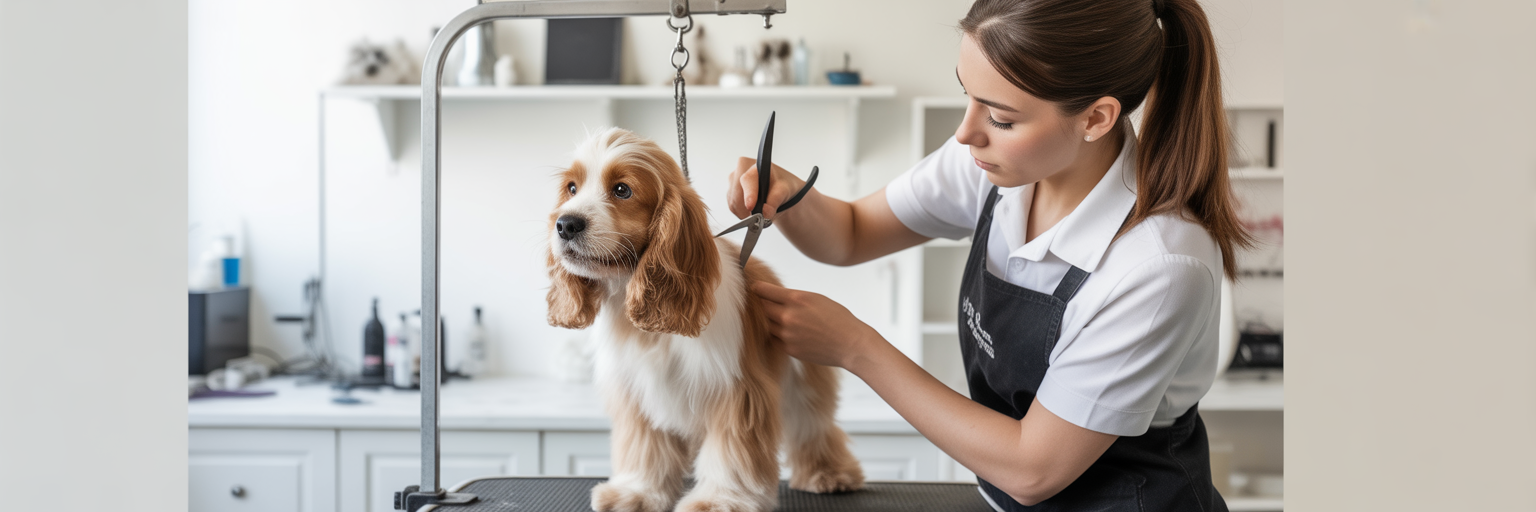
While consistent at-home care is the foundation of good grooming, professional groomers are essential partners in your puppy's health. They are not a luxury or a replacement for your daily efforts. Instead, they are specialists equipped with the tools and expertise to handle tasks that can be difficult or unsafe for an owner to perform at home.
Knowing when to book an appointment is key. Here are a few clear signs that your puppy needs a professional grooming visit:
- The beginning of mats that you cannot easily brush out with a comb.
- Overgrown nails that click on the floor, which can be difficult to trim safely at home. - The need for a breed-specific haircut that is crucial for coat health, such as hand-stripping for terriers.
- A coat that has become unmanageably thick, dirty, or has a persistent odour despite bathing.
A professional groomer offers distinct advantages in a damp climate. They have access to high-velocity dryers that are far more effective than home hairdryers at thoroughly drying dense double coats, which is critical for preventing skin issues. They can also provide practical haircuts, like a shorter "puppy cut," that make daily cleaning and maintenance much easier for you.
When you're ready for that first professional visit, using a trusted directory helps you find a qualified local expert. A great starting point for puppy grooming Dundee is to find a groomer and have a conversation with them about our local climate. Together, you can develop a practical maintenance plan. For a puppy's first introduction to a professional setting, you can find specialists through services dedicated to puppy grooming.
Making Grooming a Positive and Rewarding Routine
How your puppy feels about grooming starts with their very first experiences. These early sessions will shape their attitude towards being handled for their entire life, so the goal is to build a foundation of trust and cooperation, not fear or resistance.
You can create a positive association with a few simple, actionable steps:
- Use a special mat or towel that only comes out during grooming sessions.
- Offer high-value treats, like tiny pieces of chicken or cheese, that are given exclusively during grooming.
- Maintain a calm, reassuring tone of voice, even if your puppy is being wiggly.
- Always end every session with enthusiastic praise and a fun game.
Keep the initial sessions extremely short, perhaps just a few seconds of brushing or gently handling a paw. The most important rule is to always end on a positive note, before your puppy shows any signs of stress or boredom. This proactive method is a core part of modern dog training, and as we've shared in our guide on positive reinforcement in Dundee, it builds cooperation far more effectively than force.
Ultimately, consistency and patience are your most important tools. A well-groomed puppy in Dundee is more than just a clean puppy. It is a testament to a caring and dedicated owner, and the daily rituals of care are fundamental to building a strong, trusting bond that will last a lifetime.