
Grooming Your Dog for Dundee's Muddy Winter Walks
Why Winter Grooming is Crucial for Dundee Dogs
Anyone who has walked their dog through Camperdown Park after a week of rain knows that Dundee’s winter mud is a unique challenge. It’s not just dirt. It’s a thick, gritty, and persistent substance, fed by the damp chill that settles over the Tay. This heavy, moisture-laden mud clings to fur with a stubbornness that can make post-walk clean-ups feel like a losing battle. But the issue goes far beyond a messy house. This is a matter of your dog’s health and comfort.
When fur becomes matted and saturated with this cold, wet mud, it loses its ability to insulate. Instead of trapping a warm layer of air against the skin, it holds cold moisture, creating the perfect breeding ground for painful bacterial infections, often known as ‘hot spots’. We’ve all seen dogs with clumps of dried mud in their coats, but have you considered the physical discomfort they cause? These clumps can pull on the skin and even form solid balls of ice between their paw pads, restricting movement and causing constant irritation.
There’s a common myth that a dog’s coat should be left long and unkempt in winter for extra warmth. This is a fundamental misunderstanding of how insulation works. A clean, well-brushed coat traps air, and it is this layer of air that keeps a dog warm. A matted, dirty, and wet coat has no air pockets. It becomes a cold, heavy blanket that actually makes the dog colder and more susceptible to the chill. This is a core principle of seasonal grooming for dogs Scotland.
This constant state of discomfort can have a noticeable impact on your dog’s wellbeing. A dog that is always cold, sore, and itchy may become irritable or lose its enthusiasm for the very walks it once loved. Proactive winter grooming isn’t an aesthetic choice. It’s a necessary step to ensure your dog stays healthy, happy, and comfortable throughout the colder months.
Mastering the Pre-Walk Grooming Routine
The secret to managing Dundee’s winter mud isn’t a more intensive clean-up, but a smarter preventative routine. A few simple habits before you even step out the door can save you significant time and effort later, while keeping your dog more comfortable during its walk. Think of it as setting your dog up for success against the elements.
Start with a five-minute pre-walk brush-out. This isn’t a deep grooming session, but a quick, proactive step to remove loose fur and work through any minor tangles. A coat that is free of loose hair is far less likely to collect mud and debris, preventing the formation of mats before they even begin. This simple action makes a noticeable difference in how much of the park your dog brings home.
Selecting the right tool is essential. For a Labrador’s dense double coat, a slicker brush helps manage the shedding undercoat that can otherwise become compacted with moisture. For a Border Collie’s longer fur, a steel comb is perfect for preventing tangles in the feathering on their legs and tail. The technique is just as important. Always brush gently down to the skin to ensure you are not just skimming the surface of the coat.
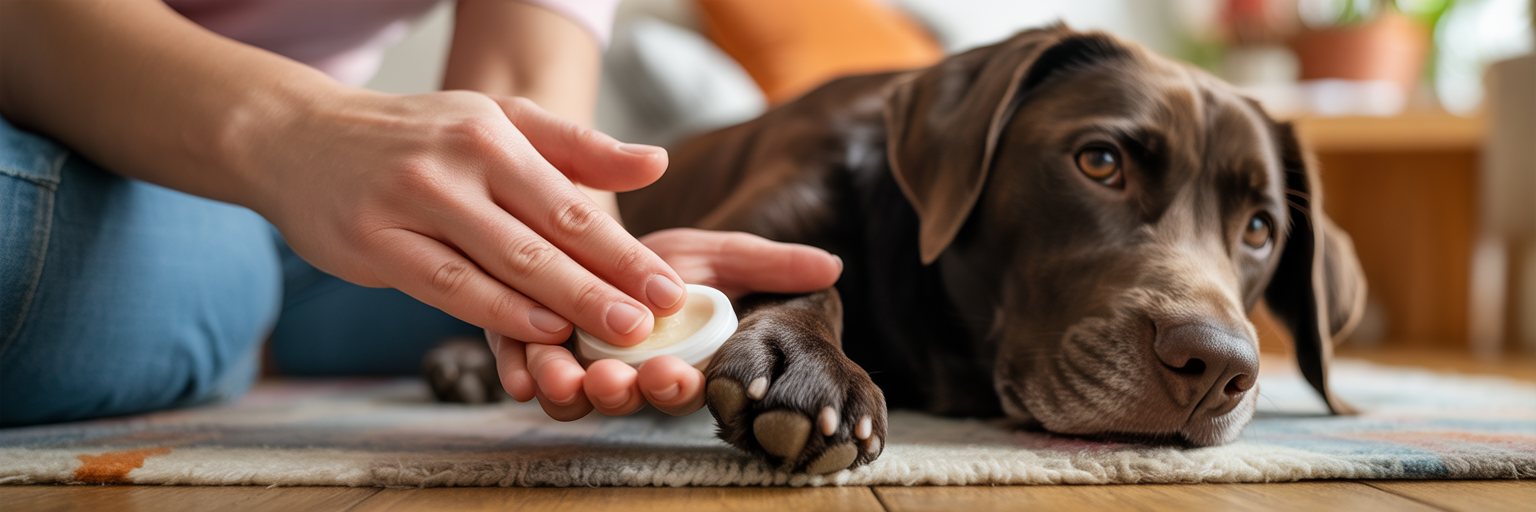
Next, consider applying a protective paw balm. This acts as an invisible barrier, shielding the sensitive pads from grit, salt, and the formation of painful ice balls. Applying it is simple:
- Ensure your dog’s paws are clean and dry before you begin.
- Scoop a small, pea-sized amount of balm with your finger.
- Gently massage it into the paw pads, making sure to cover the entire surface.
- Don’t forget to work a little of the balm between the toes and pads where moisture can get trapped.
Finally, a waterproof coat or suit is a functional tool, not just a fashion accessory. For long-haired breeds or those with fine coats that offer little natural protection, a coat is one of the most effective winter dog care tips. It minimises the amount of mud and water that soaks the belly and legs, drastically simplifying the how to clean a muddy dog process when you return home.
Essential Coat Care for Muddy Conditions
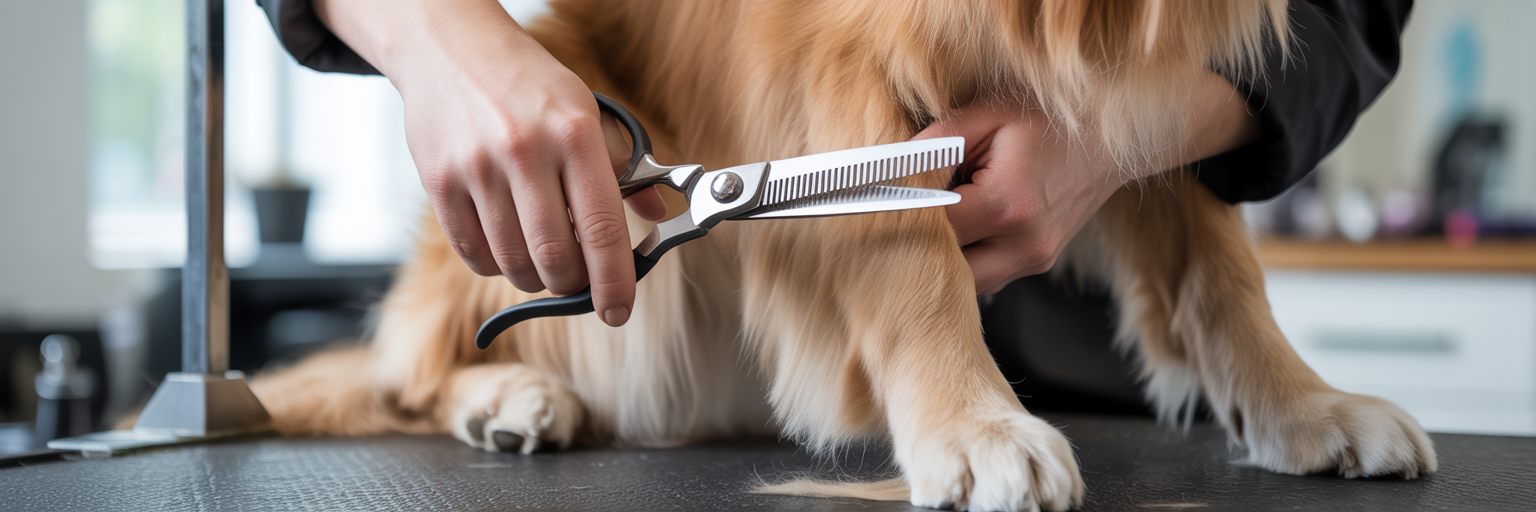
While daily routines are helpful, effective winter coat care often requires a more strategic approach, including knowing when to call in professional help. This is about maintaining the coat’s health and integrity, not just its appearance. One of the most effective strategies is the ‘strategic trim’. This is not a full shave, which would compromise your dog’s natural insulation. Instead, it involves asking a groomer to shorten the fur on the underbelly, around the paws, and on the leg feathering. This simple trim prevents the areas most exposed to the ground from collecting mud and forming ice balls, all while leaving the core coat intact to keep the dog warm.
To understand why this is so important, it helps to visualise what happens when fur gets matted. Think of a wet wool jumper that has been agitated. The fibres bind together, shrinking and tightening into a dense, felted mass. The same thing happens to your dog’s fur, and Dundee’s damp climate accelerates the process. These mats are not just unsightly. They pull constantly on the skin, causing pain and restricting blood flow.
Different coat types face different challenges in winter, and their grooming needs vary accordingly. Understanding your dog’s specific requirements is key to providing the right care.
| Coat Type | Key Winter Challenge in Dundee | Recommended Grooming Action |
|---|---|---|
| Double Coat (e.g., Labrador, German Shepherd) | Compacted, wet undercoat loses insulation and traps moisture. | Professional de-shedding treatment to remove dead undercoat; regular at-home brushing. |
| Long/Silky Coat (e.g., Setter, Spaniel) | Feathering on legs and belly collects mud and forms tangles. | Strategic trim on legs, belly, and paws; daily brushing with a comb. |
| Curly Coat (e.g., Poodle, Bichon Frise) | Curls act like a sponge for mud, leading to severe matting close to the skin. | Regular professional trims to keep coat manageable; frequent brushing. |
| Smooth Coat (e.g., Greyhound, Boxer) | Lack of undercoat offers less natural insulation and protection from wetness. | Focus on paw care and use of a waterproof coat; less intensive brushing needed. |
Perhaps the most important piece of advice is knowing when not to tackle a problem yourself. If you discover a mat that is tight against the skin and cannot be easily separated with your fingers, do not attempt to cut it out with scissors. It is incredibly easy to cut the skin, which is often pulled up into the mat. This is a job for professional dog groomers Dundee. They have the correct tools and expertise for safe removal, a service you can explore through our information on professional de-matting. Protecting your dog from injury is always the top priority.
The Post-Walk Clean-Up Strategy
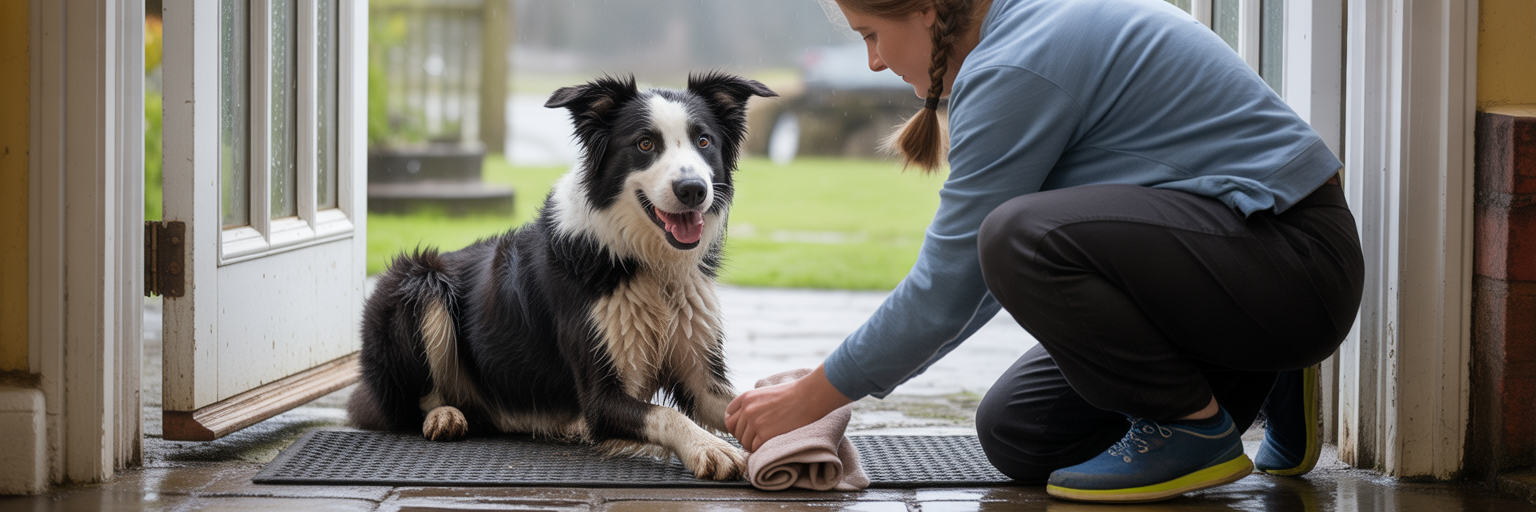
Returning home with a wet, muddy dog can feel chaotic, but a well-planned clean-up strategy can make the process stress-free for both you and your pet. The first step is to create a dedicated ‘mud station’ right by your door. This doesn’t need to be elaborate. A few old towels on the floor, a shallow basin of warm water, and a specific ‘mud towel’ can transform a messy ordeal into an organised routine. Having everything ready before you walk back in the door prevents muddy paw prints from trailing through your home.
Instead of resorting to a full bath after every muddy walk, adopt a targeted paw and leg wash. Focus only on the areas that need it. Gently wash your dog’s paws and lower legs in the basin of warm water, using a cloth to work away the grit. Afterwards, it is absolutely essential to dry the area thoroughly, especially between the paw pads. Trapped moisture in this area can lead to fungal infections and painful sores. This targeted approach is a much better answer to how to clean a muddy dog than a full-body wash.
Over-bathing is a common mistake in winter. Frequent full baths with shampoo strip the natural oils from your dog’s skin and coat, leading to dryness, flakiness, and irritation. For muddy patches on the body, spot-cleaning with a damp cloth or a quality waterless shampoo is a far better option. It removes the dirt without compromising the skin’s protective barrier.
Finally, thorough drying is non-negotiable. A damp dog is a cold dog, and lingering moisture is a primary cause of skin problems and matting. As noted by veterinary experts at PetMD, ensuring a dog is fully dry after exposure to winter moisture is key to preventing health issues. Highly absorbent microfibre towels are excellent for removing the bulk of the water. For dogs that tolerate it, a pet-specific hairdryer on a low, cool setting can be used to ensure the undercoat is completely dry. Never use a human hairdryer, as it can easily get too hot and burn your dog’s skin.
Paw and Nail Health in a Wet Climate
A dog’s paws bear the brunt of winter walks, facing everything from abrasive grit to freezing puddles. Effective dog paw care winter goes beyond a simple wipe-down at the door. It requires specific attention to fur, nails, and skin to prevent discomfort and injury. One of the most overlooked tasks is trimming the fur that grows between the toes and pads. This long fur acts like a sponge, trapping mud and moisture right against the skin. In frosty weather, this moisture can freeze into painful ice balls, and in milder damp conditions, it creates a perfect environment for bacteria to thrive.
Get into the habit of a daily paw inspection, especially after walks. It only takes a minute and can catch problems before they become serious. Make it a calm, gentle routine, and check for the following:
- Cuts, cracks, or abrasions on the surface of the pads.
- Redness or swelling between the toes, which can indicate an infection or irritation.
- Embedded debris like thorns, grit, or small stones by gently separating the pads.
- Any signs of soreness, such as your dog licking the area excessively or limping.
Proper nail length is also critical for your dog’s safety on slippery winter surfaces. Overly long nails force the toes to splay apart when they walk, reducing their foot’s natural grip. This can also alter their gait, putting unnatural strain on their joints over time. If you can hear your dog’s nails ‘clicking’ on your kitchen floor, they are too long. While some owners are comfortable trimming nails at home, it is a task that requires care to avoid cutting the quick. A professional groomer can handle this safely and efficiently.
Finally, it’s useful to understand the difference between protective and healing balms. A protective balm, as mentioned earlier, is applied before a walk to act as a barrier. A healing balm, on the other hand, is a soothing salve used to treat paws that are already dry, cracked, or sore. If you notice a crack in your dog’s paw pad that is deep, bleeding, or causing a limp, it is best to have it checked by a vet.
Finding the Right Grooming Support in Dundee
Maintaining your dog’s coat and paws through a Dundee winter is much easier with a professional partner. A good groomer does more than just give your dog a haircut. They act as a second pair of eyes, spotting potential skin issues early and providing services that are difficult to perform at home. Approaching dog grooming Dundee as a partnership simplifies your winter care routine and ensures your dog gets the expert attention it needs.
When searching for a groomer, don’t be afraid to ask questions to find the right fit. A good professional will be happy to discuss your concerns. Consider asking:
- What is your experience with my dog’s breed, especially for winter grooming?
- Do you offer a ‘tidy-up’ service for just the paws, belly, and sanitary areas?
- What products do you use for dogs with dry or sensitive winter skin?
A professional de-shedding treatment, for example, is far more effective than at-home brushing at removing the dead, compacted undercoat that causes so many winter problems for double-coated breeds. The best grooming plan is always one that is tailored to your dog’s specific lifestyle. A dog that enjoys daily muddy runs in the Sidlaw Hills will have very different needs from a small dog that primarily takes shorter walks on the pavement.
Establishing a regular grooming schedule, perhaps every six to eight weeks, prevents major issues like severe matting from developing and makes your daily maintenance at home far more manageable. It’s a proactive investment in your dog’s health and comfort. Our directory at Dog Grooming Dundee is designed to help you find that perfect match, connecting you with trusted professionals who understand the unique demands of our city.